Showing posts with label Today Business News. Show all posts

Tuesday, 3 June 2014

Putin listens as volatile markets signal distaste

Ksenia Galouchko, Halia Pavliva and Ye Xie Moscow and New York

Vladimir Putin’s territorial ambitions are bumping up against financial markets.

As the Russian president plots his next move on Ukraine, investors are giving his inner circle pause for thought.

Since Putin annexed Crimea in March in the teeth of international outrage, Russian stocks have become the most volatile since 2009. Swings in the rouble against the euro are now the most extreme on record, while expectations for fluctuations in the currency against its emerging market peers are at their highest point in two years.

That is making investors more reluctant to gamble on a country that is already close to a recession and dependent on natural resources to lead economic growth.

While Putin is motivated more by the desire to assert his nation’s power in the world, invading eastern Ukraine would have provoked harsher international sanctions and risked accelerating the flow of money out of Russia.

“We got to the point where the market speaks and politicians are forced to listen and adjust,” Mansur Mammadov, a money manager at Kazimir Partners in Moscow, said.

“The volatility was like a tsunami and it would be just logical to assume that it made the politicians realise the cost of Russian expansion in Ukraine was too much for the slowing economy.”

A gauge of price swings in Russian stocks jumped to a more than four-year high compared with shares of other developing nations. Historical volatility for the benchmark Micex index in Moscow reached 29.7 percent on Friday, almost three times the level of the MSCI emerging markets index and up from 12.7 percent at the end of February.

Moves in the rouble were amplified after the US and EU imposed sanctions on Putin allies in Russia and Ukraine. The currency’s three-month historical volatility rose to 11.3 percent from 7 percent at the end of last year. That compares with 4.4 percent for the euro as the gap between the two gauges reached 6.92 percentage points on Friday, the widest since Europe’s common currency was introduced in 1999.

A gauge of expected swings in the currency against the dollar was at the highest since October 2012 on April 25 compared with developing country currencies such as the Turkish lira and the Chinese yuan.

The increased volatility threatens to intensify the slide in the economy...


Watch Hindi News Videos on Videos.jagran.com

From iol.co.za News

Wednesday, 9 April 2014

Sun Pharma up as brokers welcome Ranbaxy purchase

An employee speaks on phone as he walks out of research and development centre of Sun Pharmaceutical Industries Ltd in Mumbai April 7, 2014. REUTERS/Danish SiddiquiShares in Sun Pharmaceutical Industries (SUN.NS) gain as much as 7.95 percent, adding to their 2.9 percent rise on Monday, as brokers upgrade the stock after Sun agreed to buy Ranbaxy Laboratories Ltd (RANB.NS) for $3.2 billion.

Sun Pharma is heading for its biggest single-day percentage gain since May 2009. UBS upgraded Sun Pharma to "buy" from "neutral" and raised its target to 720 rupees for 660 rupees on Wednesday, citing the expected contribution to earnings from Ranbaxy.

"We believe the deal makes sense given limited overlap for Sun and Ranbaxy in India and Sun's limited presence in ROW (rest of world) markets, UBS said in a report dated Tuesday, adding Sun would be able to cut administrative and research and development costs.

On Monday, Bank of America Merrill Lynch also upgraded Sun Pharma to "buy" from "neutral", citing a higher price-to-earnings multiple after Ranbaxy's acquisition.

Ranbaxy shares gained 2.2 ercent.


From reuters News

Tuesday, 8 April 2014

BJP gets traders on its side after promise to block FDI

The Confederation of All India Traders’ Association was waiting for the BJP’s manifesto to know about the party’s stand on Foreign Direct Investment in this segment.

“The traders’ community welcomes the BJP’s stand on FDI. We are hopeful that when the party comes to power, it will scrap the FDI in retail launched by the UPA government. The party has also included various demands of the traders’ community in their manifesto,” association secretary general Praveen Khandelwal said.

There is a majority of traders in Chandni Chowk parliamentary constituency and in parts of New Delhi and South Delhi constituencies. The union’s decision will help BJP candidates in all these areas.

“The steps taken by the BJP will go miles ahead in liberating retail trade from the clutches of not only MNCs but even from the vicious net of big corporates that were considering the retail trade as a profit centre by entering into partnership with MNCs,” association national president B C Bhartia said.

“This unhealthy circle encouraged and promoted by the UPA government will certainly come to an end,” Bhartia said.

The traders’ community is always considered as a traditional voter of BJP, but after implementation of FDI in multi-brand retail, the community decided to wait for every party’s manifesto before supporting anyone.

“We sent our demands to every national and regional party and prepared a chart of their manifestos. Some have included parts of our demands and some have totally ignored us. Now BJP has completely supported our cause and the party tops the chart. We have asked the entire fraternity to support BJP,” he added.

Source: Latest Business News Headlines

From deccanherald News

Five key challenges a Narendra Modi government would face

From convincing bond investors that fiscal deficit can be contained to concerns about agriculture, any new government will face critical challenges.
From convincing sceptical bond investors that the fiscal deficit can be contained to concerns that El Nino will devastate agricultural crops, any new government will face urgent and critical challenges with no easy solutions.

Expectations the Bharatiya Janata Party (BJP) and its leader Narendra Modi will win elections that started this week with a new approach to country's economic problems have helped send shares to record highs and the rupee to an eight-month peak.

To some investors that optimism is misplaced. Should Modi win the elections, his government will face its first credibility test with markets when he delivers a budget by June or July that will need to show the country can realistically contain its fiscal deficit.

That will be followed by key decisions on the current account deficit, on the relationship with a hawkish Reserve Bank of India ( RBI), on how much funds to sink into troubled state lenders, and on how to get states to promote private investments.

The BJP promised fiscal discipline and banking reforms among other policy plans when it announced its election manifesto on Monday, but gave no details.

1. Delivering a budget that contains the fiscal deficit

Any new government will need to fix finances that are in dire straits, and about to get worse.

To achieve a revised fiscal deficit target of 4.6 per cent of gross domestic product (GDP) for the year ended in March, the Congress-led government cut spending by $13 billion and pushed about $16 billion in subsidy costs into the new year...


From ET News

Wednesday, 12 March 2014

International Trade Expo - Ukraine: EU Offer Ukraine $700m Trade Breaks

The European Commission has offered Ukraine $700m worth of trade incentives in an attempt to stabilise the country's economy.

The Commission's President, Jose Manuel Barroso, said it would cut taxes on importing some Ukrainian goods. It is part of the efforts to sign the deal that was rejected by ousted Ukrainian President, Viktor Yanukovych, which sparked the crisis in the country.

It prompted mass protests and an intervention from Russian military forces. Russian's took control of the Crimea region in the South of Ukraine, including several Ukrainian military bases.

But Russian President Vladimir Putin denies involvement, suggesting that the forces are 'independent self-defence forces'.

The International Festival for Business - IFB 2014 - is the most exciting international business initiative of 2014 and International Trade Expo will be at its heart.

A two day expo with exhibitors, seminars, workshops and networking events designed to plug your business into the engine of international trade. Expert speakers, country profiles, advice clinics and innovative solutions for the challenges of doing business in the global market place. International Trade Expo is the event for everyone concerned with international trade.

Source: Business News in Hindi

From freshbusinessthinking News

Friday, 7 March 2014

Singapore police investigate death of bitcoin trader

The 28-year-old American boss of a bitcoin exchange has been found dead at the base of a Singapore apartment block, police and reports said on Thursday, in the latest misfortune linked with the troubled virtual currency.

Singapore police said they were investigating the "unnatural" death of Autumn Radtke, CE of Singapore-based First Meta, on February 26, but that no foul play was suspected.

A local technology website first reported she may have committed suicide, but later updated its report to say it was "unclear" how she died.

Broadcaster Channel NewsAsia said on its website on Thursday that Radtke "was found dead at the bottom of an apartment block". Her death comes as the virtual currency community is in turmoil after the collapse of Tokyo-based MtGox, one of the longest-established bitcoin exchanges, due to a suspected theft worth nearly half-a-billion dollars.

The Singapore Police Force said they received a call early on February 26 requesting assistance at a public housing block on the fringe of the central business district. "A woman in her twenties was found lying motionless," they said in a statement. "She was pronounced dead at the scene by paramedics. Police are investigating the unnatural death," it added. "Preliminary investigations show that no foul play is suspected."

The term "unnatural death" is used to refer to suspected suicides and other deaths not due to natural causes, such as an illness. The cause of death is subsequently determined by a coroner.

A US embassy official confirmed that Radtke was an American citizen and that it had provided assistance to her family.

News of Radtke’s death first surfaced in the technology startup community, which has a thriving presence in Singapore. First Meta confirmed her death on its website but did not give a cause. "The First Meta team is shocked and saddened by the tragic loss of our friend and CEO Autumn Radtke," it said...

Source: News in Hindi

From bdlive.co.za News

Thursday, 6 March 2014

Apple moved $8.9bn in profits from Australia to Ireland, report says

AppleApple has reportedly moved $8.9bn in profits from Australia to Ireland in the past 10 years, sparking renewed calls to curb corporate tax avoidance.

The Australian Financial Review has reported that it had obtained documents from Apple Sales International, an Irish company that is at the core of Apple’s tax arrangements, which showed the company’s estimated income from 2002 to 2013. Apple reported pre-tax earnings in Australia that totalled just $88.5m last year, but sent $2bn of income to Ireland via Singapore in the same period, according to the AFR.

The shadow treasurer, Chris Bowen, said the federal government had not been doing enough to counter tax avoidance, after the Coalition announced it would not be supporting the closure of some loopholes in the banking regime.

“It’s not fair to other Australian businesses that do pay their fair share of tax if some companies are able to shift profits around to avoid tax,” he said on Thursday.

But the trade minister, Andrew Robb, defended the government, and said it was committed to closing loopholes.

“We are very strongly committed to seeking to capture that tax which has been avoided inappropriately,” he said on ABC Radio.

The finance minister, Mathias Cormann, said the government was working through the G20 to stop international tax loopholes.

“Our view is – and that is a view that is shared around the world – that business should pay their fair share of tax where they earn profits,” Cormann said.

Apple did not provide a response to questions about the story, but in a statement to a parliamentary oversight committee in April last year, Apple’s Australia vice-president, Tony King, said: “Our tax affairs in Australia are very straightforward.

“We report to the ATO all the revenue that we derive in the Australian market. We report to the ATO all the costs of doing business in the Australian market . . . We are very open with the Australian Tax Office.

“We pay our taxes when they are due, not only income tax expense but GST, ­payroll and any other tax that might be incurred in doing business in Australia.”


From theguardian News

Friday, 28 February 2014

CCEA hikes fixed cost of urea plants by Rs 350/tonne

Markets and Macros
The Cabinet Committee on Economic Affairs (CCEA) on Friday okayed Rs 350/tonne increase in the fixed cost for urea plants in accordance to the Group of Minister's recommendations . 

Fixed cost include salary and wage expenses, contract labour, repair and maintenance, and selling costs. 

Experts say, the fixed cost increase, which has been a long-pending demand of the industry, will not be sufficient to cover the incremental jump in actual costs. As per the proposal, the fixed cost of urea produced by plants which are 30 years old or more by Rs 150 per tonne and for all other plants by Rs 350 a tonne. The minimum fixed cost would be Rs 2,300 per tonne. 

The move is expected to lead to an increase in subsidy by about Rs 900 crore which will have a positive impact on urea players. The CCEA is would also consider a proposal to modify New Investment policy for urea. Rashtriya Chem stock price On February 28, 2014, at 15:15 hrs Rashtriya Chemicals and Fertilisers was quoting at Rs 32.40, up Rs 0.30, or 0.93 percent. 

The 52-week high of the share was Rs 50.80 and the 52-week low was Rs 26.00. The company's trailing 12-month (TTM) EPS was at Rs 3.90 per share as per the quarter ended December 2013. The stock's price-to-earnings (P/E) ratio was 8.31. The latest book value of the company is Rs 42.69 per share. At current value, the price-to-book value of the company is 0.76.


Source: Business News India

From MC News

Thursday, 27 February 2014

Narendra Modi woos traders, advocates need to boost online trade

Applauding traders for their risk taking ability, Modi said, "A true quality of a great trader is taking risks. I trust my country's traders."
Pitching the need for a vision for traders, BJP's Prime Ministerial candidate Narendra Modi on Thursday said, "We will take their suggestions for our manifesto." "Our image is that of a trader's party. This image obviously is made because we work for traders," he said.

Applauding traders for their risk taking ability, Modi said, "A true quality of a great trader is taking risks. I trust my country's traders, they have the will to succeed."

At the All India Traders Convention, Modi advocated the requirement to boost online trade. "Who goes to stores to buy books anymore? Everyone goes online. We have to boost online trade not cut it," he said. "We don't have to be scared of the global challenges in trade. Let us take them as opportunities. If they go 10 steps ahead lets go 15," he added.


From ET News

With Moto X, Motorola’s full return to India is just a few weeks away

Moto X is priced $299 onwardsA few years back, Motorola was one of the most visible, and popular, phone brands in India. But in 2012, Motorola Mobility pulled out of this market, even though it was still selling phones here.

Things changed earlier this month when the company, now owned by Google,  tied up e-commerce giant Flipkart to launch its budget smartphone Moto G in India. With a very competitive price of Rs 12,499, the phone was an instant hit in the country and was sold out within days.

That success seems to have spurred Motorola to bring its Moto X to the market. In a twitter conversation as part of the Mobile World Congress, the company confirmed that Moto X is headed for India and Australia in the coming weeks.

Source: Hindi News

From indianexpress News

Monday, 24 February 2014

Italy's New Premier Wins Crucial Confidence Vote

Associated Press Italian Premier Matteo Renzi won a crucial confidence vote in Parliament on his brand new government early Tuesday, managing at least for now to tamp down anger from among his own Democrats over his brash, quick rise to power.

The vote in the Senate came hours after he argued that he could get his country back to work while the last three premiers failed.

Renzi, at 39 Italy's youngest premier, was sworn into office on Saturday along with an unusually young Cabinet, with many of the ministers newcomers to national government.

The Senate voted 169-139 to confirm Renzi's broad coalition, which ranges from his center-left Democrats to center-right forces formerly loyal to ex-premier Silvio Berlusconi. Renzi needed at least 155 votes to clinch the victory, one of two mandatory confidence votes.

The second vote, in the Chamber of Deputies, was expected later Tuesday. Renzi's coalition has a comfortable majority in the lower chamber. But he had a closer call in the Senate, where his coalition's numbers were tighter, especially after some of his own Democrats questioned on the eve of the vote if he deserved their backing.

There has been loud grumbling among his own Democrats over Renzi's heavy-handed tactics to wrest the premiership from fellow Democrat Enrico Letta. His predecessor led a coalition with the same tense partners for 10 months, but Renzi engineered his ouster after industrialists and union leaders grew impatient with tentative efforts to energize the economy after years of stagnation.

In the end, the potential defectors closed ranks, despite skepticism, after Renzi made a speech that was short on details on how he would quickly revive the economy.

"I don't believe that a government of this type can last four years," said Felice Casson, a leading Democrat who said he voted for Renzi "despite indigestion" over the neophyte premier's leadership.

Renzi insisted that debt-laden Italy must heal its public finances not because Germany's Angela Merkel or the European Central Bank chief want that, but because "it's our children" who seek a future.

He promised new laws to slash payroll taxes to encourage hiring, but didn't say how Italy would recoup the lower tax revenues.

The new premier faces "pressure to show swift signs of progress on his ambitious reform program," given that unemployment for January is likely to have stayed at 12.7 percent, said CMC Markets UK analyst Michael Hewson ahead of the speech. Youth unemployment hovers at 40 percent.

Noting the tepid Senate applause, Senator Paola Taverna echoed other opposition leaders when she said Renzi offered "nothing concrete."

Source: Hindi News

From abc News

Sunday, 23 February 2014

Takeaways From the Ouster in Kiev

Ukrainian President Viktor Yanukovych's removal from power has left both the country's old and new guard—and their supporters in Russia and the West—scrambling to gain their footing in the fast-changing political order. Here's a look at how the fall of the president affects the main players:

1 Mr. Yanukovych

The now-former president reportedly has been seeking a way out of the country, so far without success. He needs to find a way to protect his family and his wealthy business allies from retribution and possible prosecution. If he remains in the country, he's likely to face prosecution for the deaths of protesters over the last week, according to opposition leaders.

2 The (former) opposition

Having taken power far sooner than they expected even under Friday's European-brokered deal, Ukraine's fractious opposition needs to drop its traditional infighting and show it can govern, especially with the economy near collapse. At the same time, it may have to tell jubilant nationalist demonstrators they have to wait on initiatives such as restricting the use of Russian, which would be polarizing in the country's east.

3

The U.S.

The Obama administration views the tentative direction in Ukraine positively, despite the setback of recent violence. The administration wanted to see popular demands for greater engagement with Europe gain traction and had hoped for the rollback of antidemocratic laws and practices. They see the Yanukovych era as over, officials say. At the same time, administration officials have sought to put strict limits on U.S. involvement to avoid turning the situation into a standoff between the U.S. and Russia.

Since the recession officially ended in June 2009, government jobs held by women have fallen 3.7%. Jobs held in the government by men are down just 3%. Conversely, retail and leisure jobs— generally defined as low-wage—held by women have climbed 7.0%.

4 The EU

The European Union appeared to have lost Ukraine to Russia when former Mr. Yanukovich backed off from signing a trade-and-aid deal in November. Now, with a chance to win it back, it will have to put its money where its mouth is. European governments will insist that the new leaders in Kiev embark on tough economic reforms and aim to make sure the country doesn't break up. They will also try hard to keep Russia placated.Adjusting for seasonal variations helps economists interpret the data and compare months to one another. But the biggest outlier months are the hardest to adjust. Annual revisions to both the household and payroll surveys add to the doubt about the numbers.

5 Russia

Reeling from what seems like a major setback in Russian President Vladimir Putin's drive to build a Moscow-led bloc of fellow former-Soviet states, the Kremlin must weigh how much tension it is ready to create in relations with the West over Ukraine. For Moscow, there could still be a long game. A pro-Western government took over in Kiev in 2005 after similar street protests but lost at the ballot box four years later to a pro-Russian candidate—Mr. Yanukovych.


From WSJ News

Thailand crisis: Bangkok blast toll rises to three

A young girl has died from injuries sustained in Sunday's bomb blast in Bangkok, bringing the death toll from the attack to three.
Bomb squad police examine the scene of a deadly explosion at an anti-government rally on 23 February 2014 in Bangkok
The apparent grenade blast took place near an anti-government protest site in the heart of the capital.

A woman, 59, and a four-year-old boy were confirmed dead on Sunday. Doctors said on Monday that the little boy's sister died later of brain injuries.

Twenty-two people were hurt, including a nine-year-old boy in intensive care.

Sunday's attack came hours after gunmen opened fire on an anti-government rally in eastern Thailand, killing a five-year-old girl.

Thai Prime Minister Yingluck Shinawatra has condemned the attacks, describing them as "terrorist acts for political gain".

UN Secretary Ban Ki-moon has also spoken out, calling for violence "from any quarter" to end immediately.

'Harder fight'

Tensions across Thailand have escalated since a wave of anti-government protests began in November.

The demonstrators want Ms Yingluck to resign to make way for an appointed interim government, but she has refused.

Last week, several people were killed in clashes that erupted in Bangkok when police began clearing sites blocked by protesters.

No group has so far said they carried out either of the weekend attacks.

But the BBC's Jonathan Head in Bangkok says it appears to be the start of retaliation by the armed wing of the so-called "red-shirt" movement that backs the governing Pheu Thai party.

Ms Yingluck heads a government that won elections in 2011 with broad support from rural areas.

In response to the protests, the prime minister called snap elections on 2 February, which her government was widely expected to win.

However, the polls were boycotted by the opposition and voting was disrupted by protesters at about 10% of polling stations, meaning by-elections are needed before a government can be formed.

Correspondents say red-shirt activists have watched with growing frustration as the protesters - who enjoy the backing of the military and powerful royalists - have been allowed to obstruct the government and sabotage the election.

On Sunday, leaders of the pro-government United Front for Democracy against Dictatorship (UDD) held a rally attended by thousands of supporters.

"This fight will be harder than any other ... You must think how we can deal with [protest leader] Suthep [Thaugsuban] and those supporting him," UDD leader and Pheu Thai official Jatuporn Prompan said.

Are you in Bangkok? Will you continue to demonstrate for or against the government? Send us your experiences using the form below.

Source: News in Hindi

From BBC News

Thursday, 20 February 2014

67 confirmed dead in Ukraine violence

Kiev: At least 67 people have been killed in three days of violence in Ukranian capital city, the Kiev City Administration confirmed Thursday, adding 551 people suffered injuries of which 332 have been hospitalised since Tuesday.

There were 22 bodies of other demonstrators in a camp where medics treat wounded activists, Xinhua quoted witnessing telling a TV channel.

Moreover, the country's Interior Minister Vitaly Zakharchenko said that at least 13 police officers have been killed and 67 captured by radical demonstrators since Tuesday.

Zakharchenko also said that police had been issued with combat weapons and would use them "in accordance with the law" to defend themselves.

Protests in Kiev began in November after President Viktor Yanukovych backtracked on a trade deal with the European Union and rather preferred a $15bn bailout from Russia. They turned violent in mid-January and have been remarkably escalating this week.


From twocircles News

Wednesday, 12 February 2014

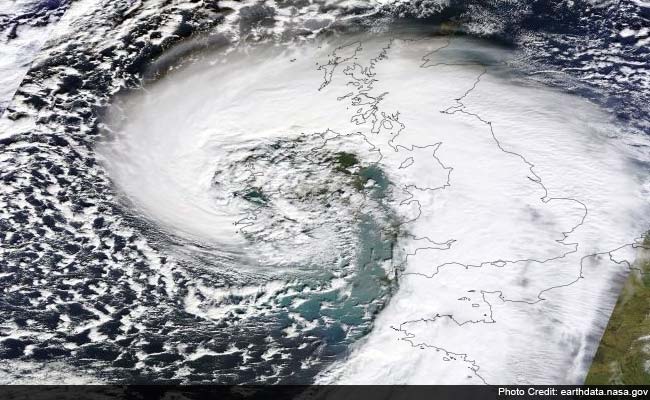
Flood-hit Britain now battered by storms, high winds

Flood-hit Britain now battered by storms, high windsFlood-hit Britain suffered a fresh battering on Wednesday from storms and high winds that caused power outages to nearly 150,000 homes, the cancellation of football matches and the death of one man.

Gusts approaching 100 miles (160 kilometres) per hour tore at parts of England and Wales, and the River Thames was predicted to rise to its highest level in more than 60 years in places, threatening towns and villages to the west of London.

One man died after being electrocuted while attempting to move a fallen tree that had brought down power lines in Wiltshire, southwest England, and 147,000 homes, mostly in Wales, were left without power after high winds brought down power cables, the authorities said.

More than 1,100 properties along the Thames have been flooded since January 29, authorities said.

More soldiers were drafted in to rescue residents and lay sandbags in deluged villages where primary schools have been transformed into makeshift emergency centres.

The Met Office national weather service issued a red warning -- the highest threat level -- for "exceptionally strong winds" in western parts of Wales and northwest England.

Coastal areas in western England could also be flooded after being pounded by high waves.

Fourteen severe flood warnings -- indicating a danger to life -- were in place in Berkshire and Surrey to the west of London, while two remain in Somerset in southwest England, the first area to be badly hit.

Forecasters said 70 millimetres (2.75 inches) of rain would fall by Friday in southwest England.

Emergency efforts were picking up following criticism of a sluggish response, and the military said 2,000 soldiers were available to help, with hundreds pressed into action already.

In Wraysbury, the Thameside village that has been submerged since the weekend, 83-year-old Jennie Francis's house has flooded and her hallway was filled with water.

She has been forced to take refuge at her son's home, but she said the arrival of the army had made a huge difference to the village's morale.

"The soldiers have been absolutely marvellous, it's wonderful to have them here. People were cross before, but now they are relieved to have some help," she told AFP.

"The soldiers have been going around knocking on people's doors asking for help. They're lovely."

Major General Patrick Sanders, who is co-ordinating the armed forces response, called the conditions an "almost unparalleled natural crisis".

The bad weather also hit midweek football fixtures, with Manchester City's Premier League match with Sunderland and Everton's game with Crystal Palace both called off.

The twitter sites of the host football clubs said the safety of the fans travelling to and from the grounds could not be guaranteed because of the strong winds.

The embattled Environment Agency -- the government body responsible for flood defences that has faced the brunt of criticism -- fought to defend its reputation.

One of its officials, David Murphy, addressed Wraysbury's residents alongside volunteer flood warden Su Burrows -- who berated Britain's defence minister on live television on Tuesday.

Although Murphy faced a few angry questions he got a round of applause, and Burrows told the crowd: "These guys are our friends."

The Environment Agency's chief executive, Paul Leinster, said: "We continue to have teams out on the ground 24/7 working to protect lives, homes, businesses, communities and farmland."

Prime Minister David Cameron chaired the government's COBRA emergency committee and then told parliament he stood by his pledge that "money is no object in this relief effort".

"I want communities who are suffering and people who see water lapping at their doors to know that when it comes to the military, when it comes to sandbags, when it comes to restoring broken flood defences, all of those things, money is no object," he said.

Cameron warned that a further 800 to 1,000 homes were at risk of flooding as the Thames rose.

He also said grants of up to £5,000 (6,100 euros, 8,300 euros) would be available to businesses and homeowners affected by flooding to allow them to better protect their properties in future.

But that was little consolation to towns like Staines, just a few miles (kilometres) from London Heathrow Airport, one of the world's busiest air hubs.

Source: Hindi News

From NDTV News

Korean Talks Fail to Yield Agreement

A high-level meeting between North and South Korea on Wednesday failed to yield any agreements, with the North Korean delegates rejecting the South’s call to denuclearize and the North seeking a postponement of the South’s military drills with the U.S.

A scheduled reunion of families separated by the Korean War—a symbol of bilateral cooperation—faces a possible cancellation. The North said it could not coincide with the joint U.S.-South Korea exercises, slated to begin on Feb. 24.

South Korea has said the biggest U.S.-South Korea drills of the year won’t be affected, a position its delegates maintained at the meeting, according to an official at the Unification Ministry, which handles inter-Korean affairs.

South Korea is expected to discuss the Wednesday meeting with U.S. Secretary of State John Kerry when he arrives in Seoul Thursday afternoon.

Wednesday’s talks, suggested by Pyongyang, represented the most senior-level contact between the two sides since early last year.

Ties have been strained after the North’s third nuclear weapons test in February 2013 and the subsequent shutdown of a jointly-run industrial park inside the North, a key venture for economic cooperation. At the time, the North threatened pre-emptive strikes on both the South and the U.S., protesting their annual joint drills in South Korea. Pyongyang routinely objects to the drills, calling them a rehearsal for invasion.

A year later, the joint exercises—known as Key Resolve and Foal Eagle, and the biggest among other regular drills involving tens of thousands of troops from both sides—are again generating hostile rhetoric from the North.

At the meeting on Wednesday, delegates from the North’s highest military body asked that the drills be delayed until after the family reunions, slated for Feb. 20-25, according to the South’s ministry official.

The North delegates also called the issue of denuclearizing “not a topic for discussion between North Korea and South Korea,” the official said.

The South told the North the matters should be treated separately and the drills would proceed. The U.S. and the South say the exercises are purely for defense purposes.

South Korean Unification Minister Ryoo Kihl-jae told the National Assembly Thursday that he planned to send officials to the reunion venue inside the North as scheduled. A ministry official said the team is expected to leave about five days prior to the reunion.

North Korea hasn’t publicly stated its intentions regarding the reunions since Wednesday’s meeting.

Previous reunions have brought together thousands of family members separated during the Korean War, but the majority of South Koreans who have officially sought reunions have died without seeing their relatives.

The first reunion took place in 1985, and others followed irregularly on both sides of the border in the years after. The first bilateral summit in 2000 resulted in increased cross-border reunions, sometimes by video-chat, until 2010.

That year the North shelled a southern border island, killing two South soldiers and two civilians—and bringing a halt to the reunions.

Another key point of contention for the two sides on Wednesday was their views on press freedom, the ministry official said.

The North has blasted South media’s “slanderous” portrayals of Pyongyang leadership and on Wednesday demanded that Seoul control the media. The South delegates rejected the request, the official said.


From WSJ News

Tuesday, 11 February 2014

China and Taiwan hold historic talks

China and Taiwan hold historic talks
China and Taiwan on Tuesday held their first government-to-government talks since they split 65 years ago after a brutal civil war — a symbolic yet historic move between the former bitter rivals.

Taipei's Wang Yu-chi, who oversees the island's China policy, met his Beijing counterpart Zhang Zhijun in Nanjing on the first day of a four-day trip.

With sensitivities crucial, the room was neutrally decorated with no flags visible and nameplates on the table devoid of titles or affiliations.

Before leaving, Wang told reporters: "The visit does not come easy; it is the result of interactions between the two sides for many years."

Nanjing, in eastern China, was the country's capital when it was ruled by Wang's Kuomintang, or Nationalist, party in the first half of the 20th century.

When they lost China's civil war — which cost millions of lives — to Mao Zedong's Communists in 1949, two million supporters of the Nationalist leader Chiang Kai-shek fled to Taiwan, officially known as the Republic of China.

The island and the mainland have been governed separately ever since, both claiming to be the true government of China and only re-establishing contact in the 1990s through quasi-official organisations.

Tuesday's meeting is the fruit of years of efforts to improve relations.

But Beijing's Communist authorities still aim to reunite all of China under their rule, and view Taiwan as a rebel region awaiting reunification with the mainland — by force if necessary.

Over the decades Taipei has become increasingly isolated diplomatically, losing the Chinese seat at the UN in 1971 and seeing the number of countries recognizing it steadily whittled away. But it is supplied militarily by the United States and has enjoyed a long economic boom.

No official agenda has been released for the talks — widely seen as a symbolic, confidence-building exercise. Wang said he would not sign any agreements but added: "The main purpose of the visit is to help facilitate mutual understanding."

Taiwan is likely to focus on reaping practical outcomes from the discussions, such as securing economic benefits or security assurances, while China has one eye on long-term integration of the island, analysts say.

The political thaw comes after the two sides made cautious steps towards economic reconciliation in recent years.

As the heirs of a pan-Chinese government, Taiwan's ruling Kuomintang party accepts the "One China" principle and is opposed to seeking independence for the island.

Since it returned to power on the island in elections in 2008, President Ma Ying-jeou has overseen a marked softening in Taiwan's tone towards its giant neighbour, restoring direct flights and other measures.

In June 2010 Taiwan and China signed the landmark Economic Cooperation Framework Agreement, a pact widely characterised as the boldest step yet towards reconciliation.

Yet despite the much-touted detente, Taipei and Beijing have still shunned all official contact and negotiations have been carried out through proxies.

While these bodies — the quasi-official Straits Exchange Foundation representing Taiwan and the Association for Relations Across the Taiwan Straits for China — have achieved economic progress, they lack the power to broach deeper-held differences.

Analysts say only government-level officials can address the lingering sovereignty dispute that sees each side claiming to be the sole legitimate government of China.

Tuesday's meeting will be watched closely to see whether it can pave the way for talks between Ma and his Chinese counterpart Xi Jinping — although chances of that happening any time soon are slim.

"The current interaction across the Taiwan Strait is quite positive," said Jia Qingguo, a professor of international studies at Peking University.

Ties have "been developing very fast, but the potential of this relationship has not been fully tapped (by) both sides," he said.

"But people should not expect too much out of it. It will take time for the two sides to get really integrated."

Nonetheless the mood surrounding the talks soured in Taiwan after Beijing refused to issue credentials to the Taipei-based Apple Daily and the US government-funded Radio Free Asia at the weekend.

Taiwan, on Monday, said that it would raise the issue of press freedom with China during the talks.


From TOI News

US intelligence chief says Hamid Karzai unlikely to sign security pact

The US director of national intelligence said on Tuesday he does not believe Afghan President Hamid Karzai will sign a bilateral security agreement with the United States.

The Obama administration has been pressing Karzai to sign a pact that would authorize US troops to remain in Afghanistan after 2014. Karzai has refused to sign so far, although Washington insists a deal must be approved before it will agree to leave a contingent of troops in Afghanistan.

"It's my own view, not necessarily company policy... I don't believe that President Karzai is going to sign it," said National Intelligence Director James Clapper, the highest level US official to express such strong doubt, at a US Senate hearing.

When asked if it would "clear the air" if the United States were to declare it would just wait for the next Afghan president to sign the security agreement, Clapper said it could be positive.

"It could have a salutary effect, I suppose, if we said that," he told the US Senate Armed Services Committee.

The United States and other nations have been seeking to keep thousands troops in Afghanistan for counterterrorism and training of Afghan personnel after US forces formally withdraw at the end of 2014. The action would end a 13-year mission in Afghanistan that began after the September 11, 2001, attacks.

In the absence of a bilateral agreement, the White House says all US forces will withdraw at the end of the year, and that a decision from Karzai is needed within weeks.

Karzai has called that an empty threat and suggested any security deal could wait until after his country's April elections. Afghanistan's constitution bars Karzai from running for a third term.

WHITE HOUSE STANDS FIRM

The Wall Street Journal reported on Monday that the United States was considering waiting until Karzai leaves office before completing the pact and deciding on a troop presence beyond 2014. The White House said it was standing by its previous comments on the issue.

Lieutenant General Michael Flynn, director of the Defense Intelligence Agency, said there would be consequences from a delay.

"The level of uncertainty, the potential loss of confidence by the people of Afghanistan, by the Afghan national security forces, you know, is a real problem," Flynn said.

Karzai's failure to sign the agreement is just one issue fueling tension in US-Afghan relations.

Separately, US forces in Afghanistan on Tuesday condemned Kabul's decision to proceed with plans to release additional detainees that Washington believes pose a continuing militant threat.

Senator Carl Levin, the Michigan Democrat who is chairman of the committee, criticized Karzai during the hearing.

"Whoever the next Afghan president is, he is likely to be more reliable than President Karzai, and his signature is likely to instill more confidence than would Karzai's signature," Levin said.

South Carolina Republican Senator Lindsey Graham promised to introduce a Senate resolution soon, condemning the prisoner release and cutting off some aid to Afghanistan.

"I will be urging my colleagues to cut off all developmental aid to Afghanistan as a response until after the next election," Graham said.

Source: News in Hindi

From DNA News

Pervez Muaharraf's counsel seeking trial under Army Act for treason offence

The counsel for former Pakistan president General (r) Pervez Musharraf is seeking trial for the high treason offence under the Army Act.

Dr Khalid Ranjha told the Special Court that Army Act 1952 had provision for trial of high treason offence for army personnel. The three-member bench resumed the hearing of high treason case against Musharraf under Article 6 of the Constitution during which Ranjha spoke about the possibility of trial under the act, the Nation reports.

According to the report, Ranjha said the incumbent government out of personal vendetta had initiated trial against Musharraf under Article 6 of the Constitution read with High Treason (Punishment) Act 1973. The Special Court was established under Criminal Law Amendment (Special Court) Act 1976. He said Army Act was applicable on an army man breaching the Constitution.


From DNA News

Thursday, 6 February 2014

Spectrum auction takes off from Rs. 52,689 crore

 The third round of spectrum auction commenced for the fifth day on Friday with Delhi witnessing an upward revision in prices for both the premium 900 Mhz and 1800 MHz band.

“Auction has started. There is excess demand in circles including Assam, J&K, MP, West Bengal, UP (E) and UP (W),” a Department of Telecom (DoT) official said.

At the end of fourth day, telecom companies have jointly made bids worth about Rs 52,689 crore. The government has got bids of around Rs 30,754 crore for 1800 Mhz band and Rs 21,935 crore for 900 Mhz band.

The price of 900 Mhz in Delhi shot up by about 78 per cent to Rs 639.24 crore per megahertz as compared to the base price of Rs 360 crore fixed by the government; whereas for the 1800 MHz band, the reserve price rose by 5 per cent to Rs 230 crore a MHz.

The auction for the fourth day ended with no excess demand for the first time for 900 Mhz in any of the three metros — Delhi, Mumbai and Kolkata.

In Mumbai, the price of 900 Mhz band increased by 72 per cent to Rs 563.09 crore for a Mhz and in Kolkata by 54 per cent to Rs 192.71 crore.

Government has put on auction about 385 megahertz of spectrum in the 1800 Mhz band, which started on February 3, following a February 2013 Supreme Court order.

Government is auctioning airwaves in 900 Mhz band in Delhi, Mumbai and Kolkata, which are held by Vodafone, Airtel and Loop Mobile through their licences which are expiring in November.

The 3G auction in 2010 lasted for 34 days, while the auction in November 2012 lasted for 2 days and March auction last year lasted only one day.

In November 2012, bids worth Rs 9,407 crore were received for spectrum worth Rs 28,000 on offer.

In March 2013, no GSM operators bid at the auction and only CDMA operator Sistema Shyam bought spectrum of about Rs 3,600 crore in eight of the 21 service areas.

Source: Hindi News

From TH News